
Noted
A reflective platform that pairs photos with music, turning everyday moments into something you can feel, revisit, and understand.
Where your story meets soundtrack.
ROLE
designer researcher
TIMELINE
Oct-Dec 2023
FOCUS
TOOLS
Figma, React Native
challenge
We capture everything. Photos, voice memos, journal entries, scrapbooks, time capsules. But we rarely go back.
Taylor, has journaled every day for 15 years and almost never rereads what she's written. Michael keeps all his entries in one giant Notes app document with no organization. He loves returning to old thoughts but has no real way to find them so he ends up aimlessly scrolling around the note.
Their memories live across platforms— unorganized, disconnected, and quietly forgotten.
Reflection isn't failing because we don't capture enough. It's failing because we don't have a natural way back in.
how might we make reflection feel natural, and still emotional?
Reflection doesn't happen through the collection of memories, it happens through feeling.
insights
We spoke with avid journalers, founders of reflection-based apps, time capsule participants, and even cold-emailed strangers from newspaper articles about time capsules and posted on Reddit looking for interview volunteers. Two patterns kept surfacing:
Looking back is hard — even for people who extensively document their lives. And combining different mediums (photos, writing, sound) unlocks a kind of emotional recall that any single medium struggles to reach alone.
discovery
With these broad insights, we experience-prototyped three directions:
music as an anchor
The reaction to musically driven entries was immediate and visceral— so we leaned in.
People don't remember moments just visually. They remember through emotion, through sound, through association. And music turned out to be an extraordinarily powerful anchor.
A song can transport you back to a specific moment. People already use music to process and regulate how they feel. And unlike a photo or a journal entry, music is a shared language.
vision
Noted introduces a simple shift: pair a memory with a feeling through music.
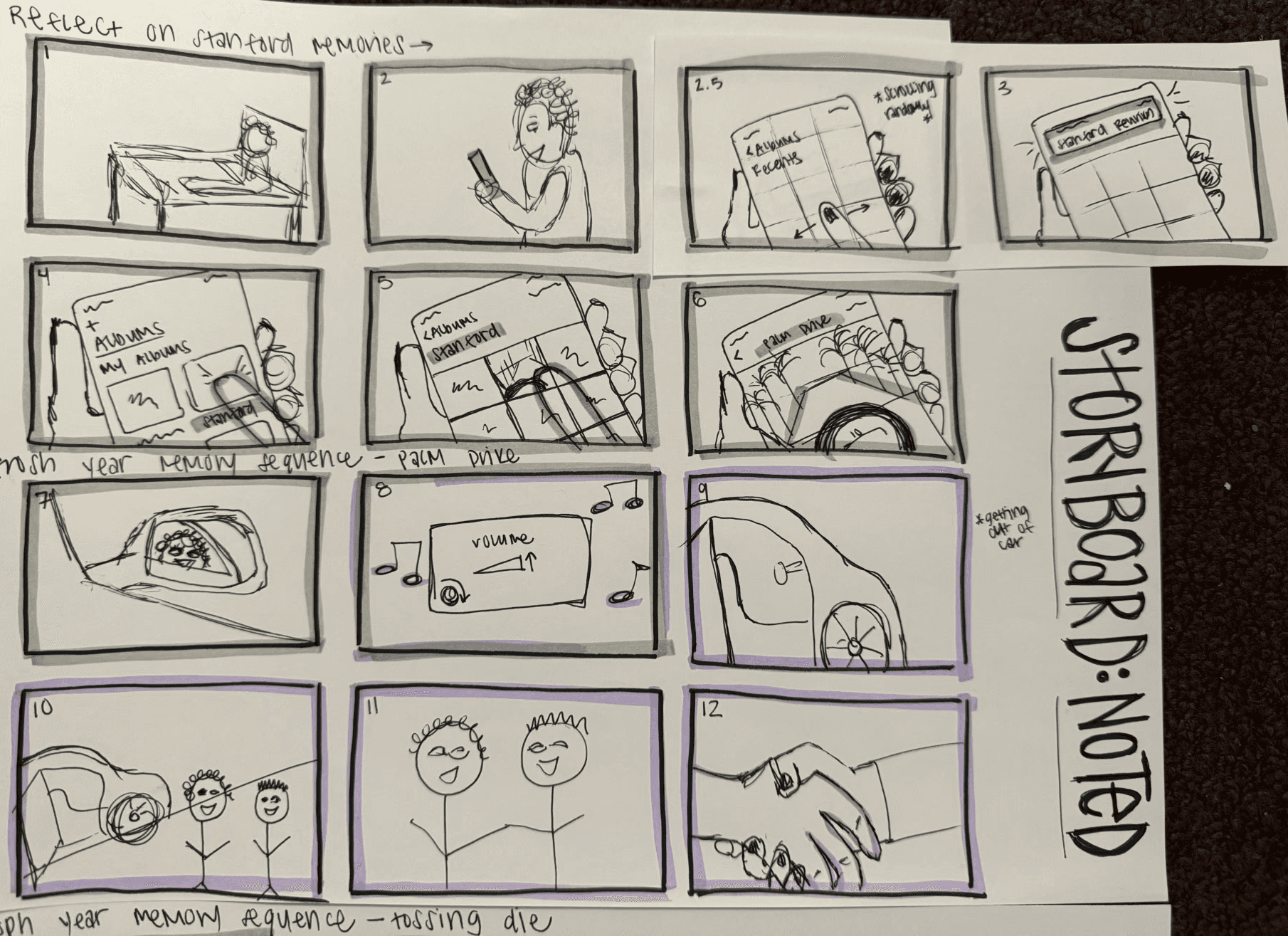
To sharpen that vision, we created a storyboard and a short film that brought the concept to life and helped us align on what the experience should feel like before anything else.
prototyping
We explored wildly different form factors first — mobile, tablet, VR, even Apple Watch — before landing on mobile. Phones are the primary music-listening device for most people, camera rolls already live there, and the longer interaction time (compared to a watch) felt right for reflection.
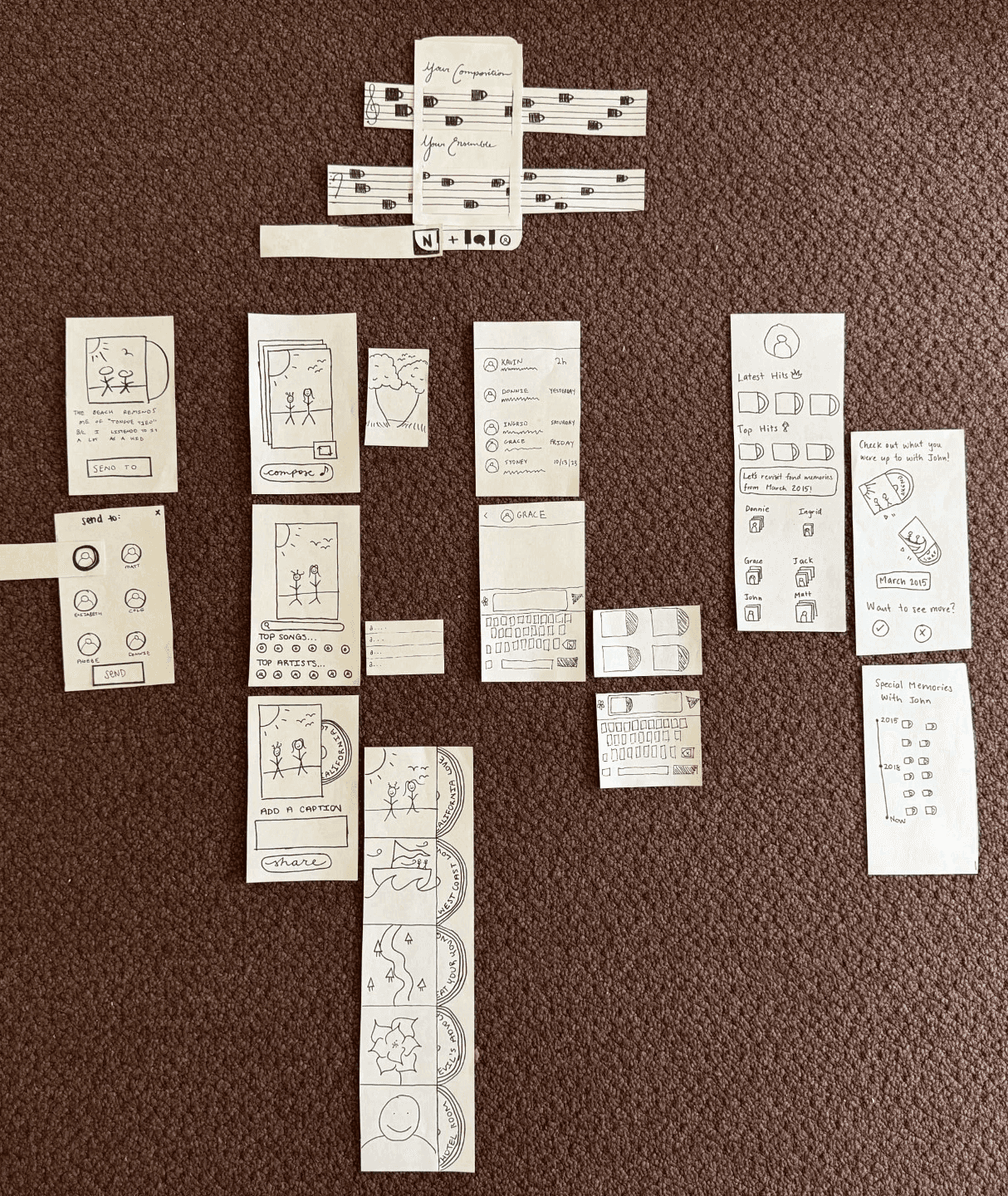
We started testing in the lowest-stakes way possible. We built a paper prototype with sliding strips of paper for scrollable elements and tested with five participants recruited from around campus.
The core flow:
A photo surfaces from your camera roll. You pair it with a song that captures the feeling of that moment. You add a thought — or leave it as is. The pairing shares to your friends. Over time, you revisit your own and your friends' pairings.
From there, we moved to drawn wireframes and then into Figma for low fidelity prototypes. Along the way, we ran a heuristic evaluation that surfaced a number of violations. The biggest themes were around navigation clarity, consistency, and making the app's purpose immediately understandable.
compose
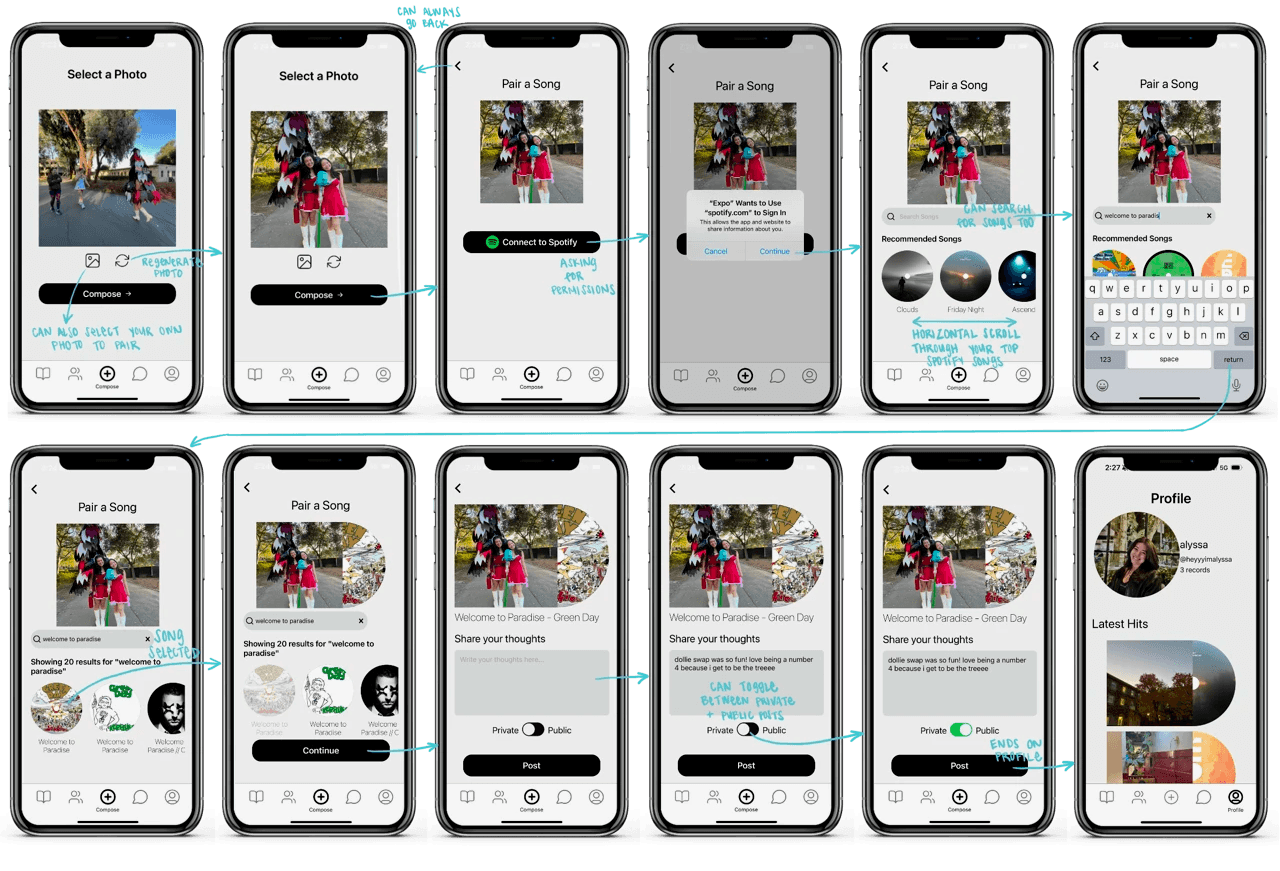
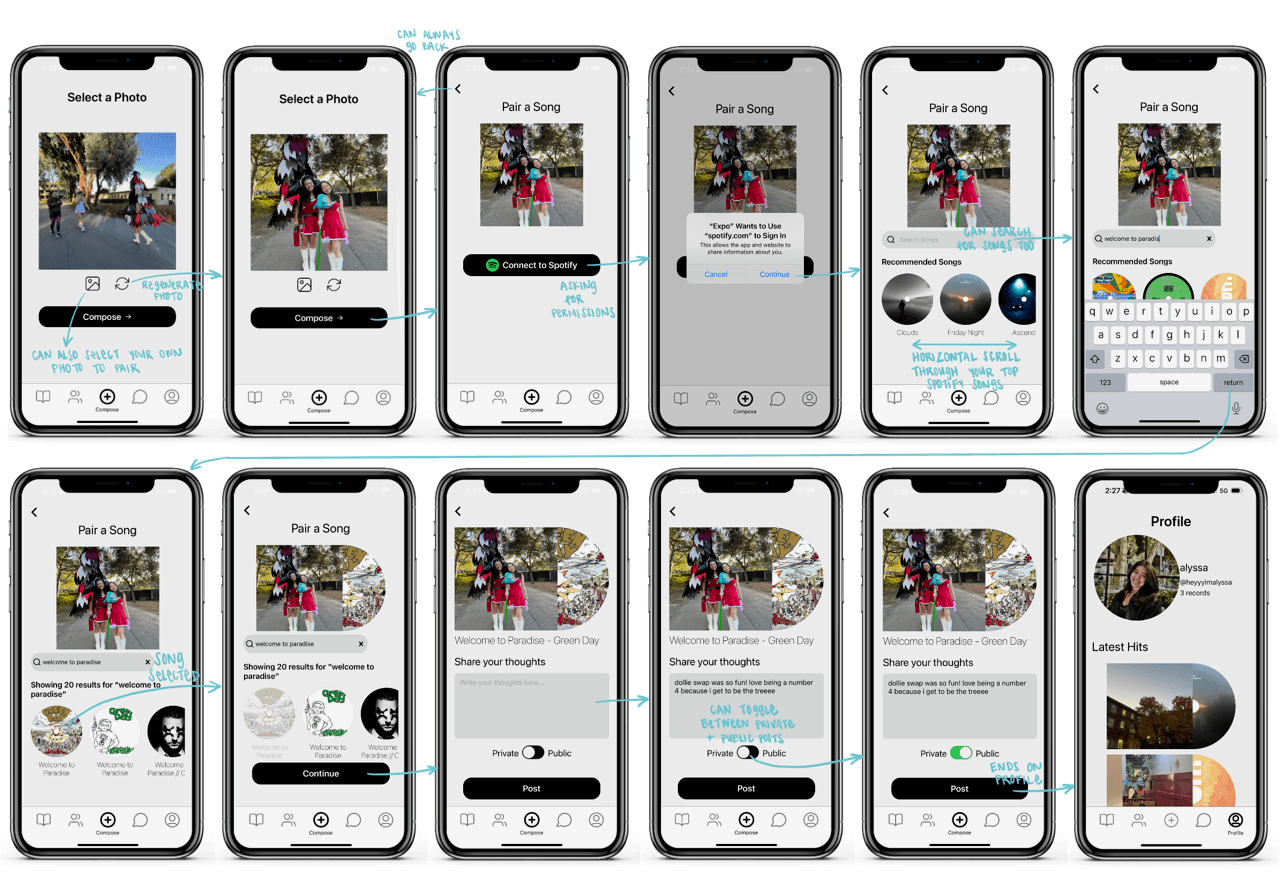
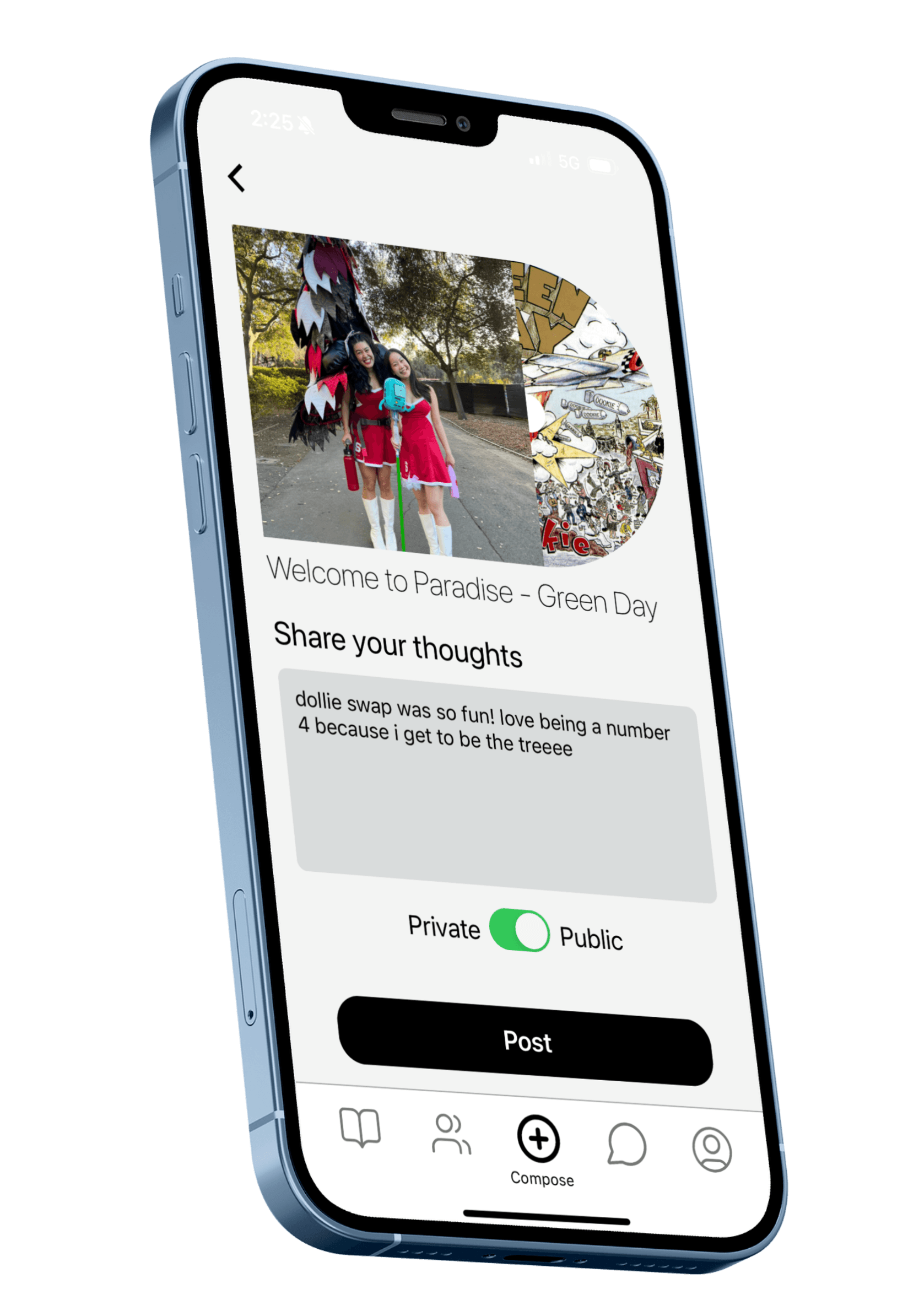
This is the core action: pair a song to a photo.
Noted surfaces a random photo from the user's camera roll and invites them to match it with a song — using music's emotional power to create a space for reflection. Users can also choose a specific photo if there's a moment they want to sit with.
reflect
Rediscover what you've already felt.
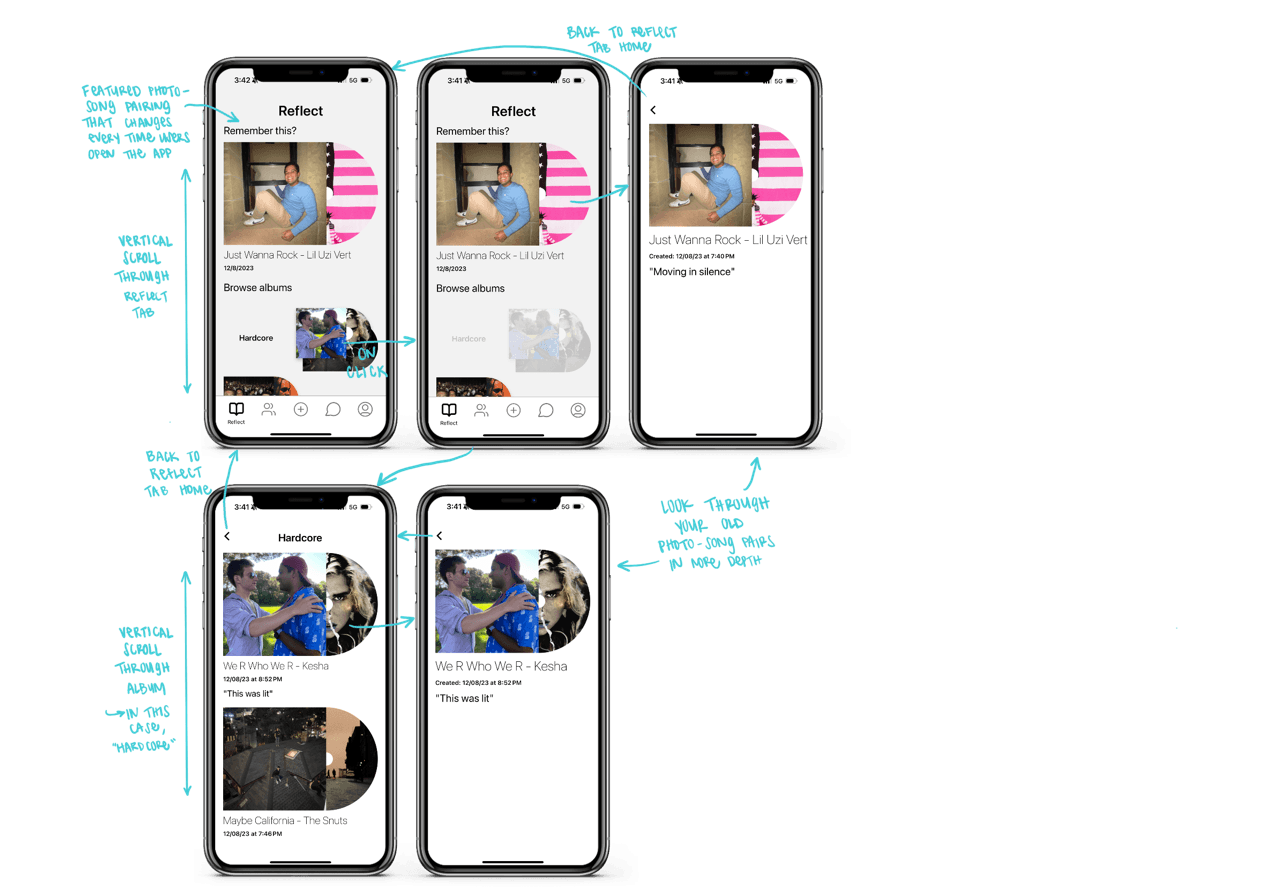
The Reflect page surfaces previously created photo-song pairings— a featured memory at the top, with albums below organized by the genre and mood of the songs attached. Over time, this becomes a living emotional archive.
messages & feed
Memories aren't just personal — they're shared.
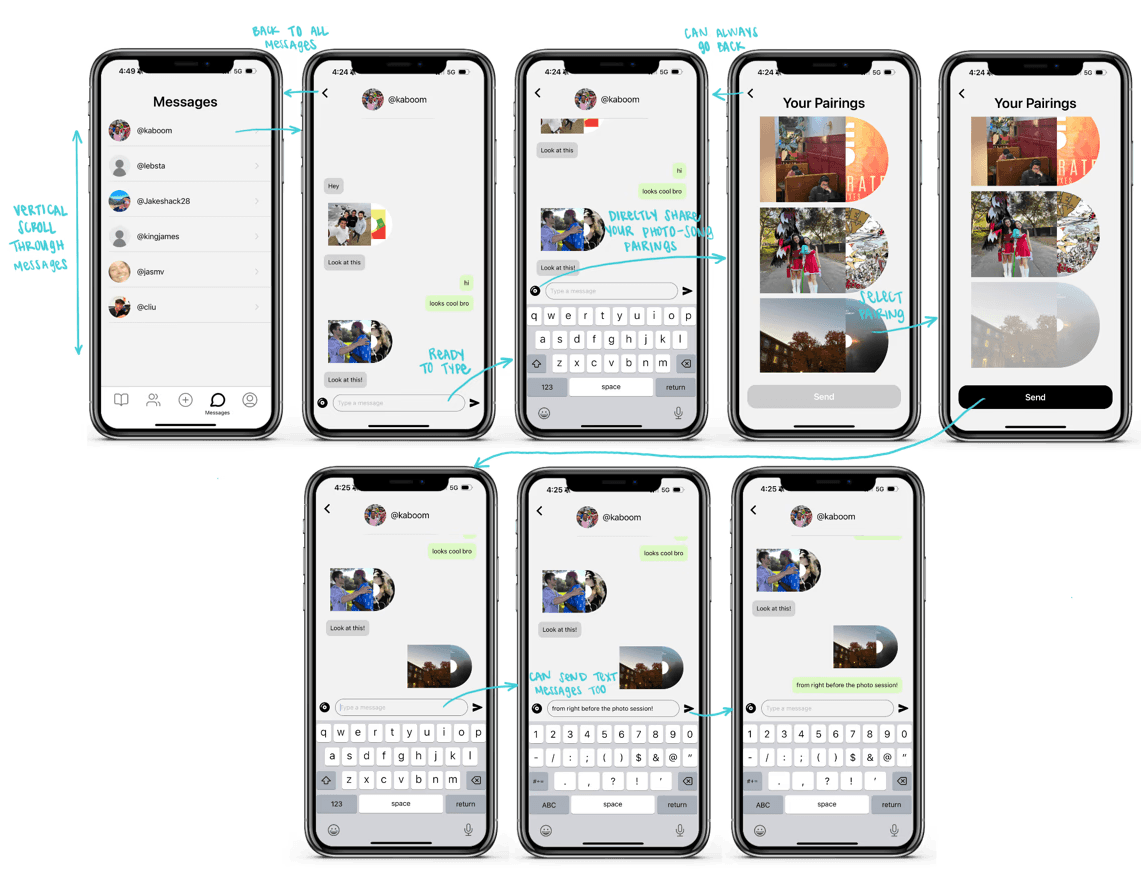
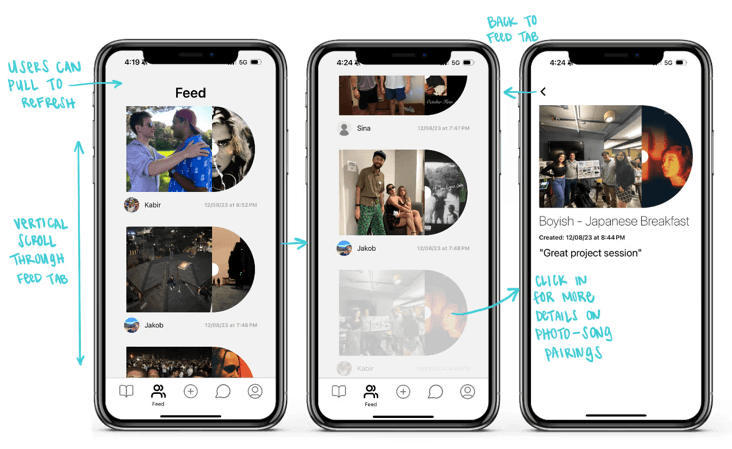
Users can toggle a pairing to public from the Compose screen, or send one directly to a friend through Messages. The Feed becomes an intimate space to share memories and emotions tied to them.
values & tensions
Then we started building out a working prototype with the help of React Native, GitHub, and Expo Go.
We designed around four values: fostering reflection, strengthening close connections, protecting privacy, and keeping friction low.
But these values sometimes pulled against each other. Social sharing can make posts performative — undermining the introspection we were designing for. We resolved this with a private/public toggle, so users could capture the full reflective experience of creating a pairing without the pressure of an audience.
Similarly, the app needs camera roll access to surface photos for reflection — a tension between privacy and the core experience. We prioritized the reflective value, storing nothing locally and keeping all data in a Firebase backend.
reflection
If I were to revisit Noted, I'd want to explore in-app song playback. Currently you can only see the album art and title, but hearing the music while viewing a pairing would add a whole new layer. I'd also want to build out the social network more intentionally, moving from "everyone can see everything" to curated, invite-only connections that match the app's intimate tone.
The biggest thing I took from this project: the most meaningful ideas came not from brainstorming what we wanted to build, but from returning to what people told us they needed. The early stages of needfinding and diving into experience prototypes were crucial in finding our direction for Noted.
where your story meets soundtrack